Keep Two Auth Planes
The MCP client authenticates to the gateway. The upstream API credential stays behind the gateway.
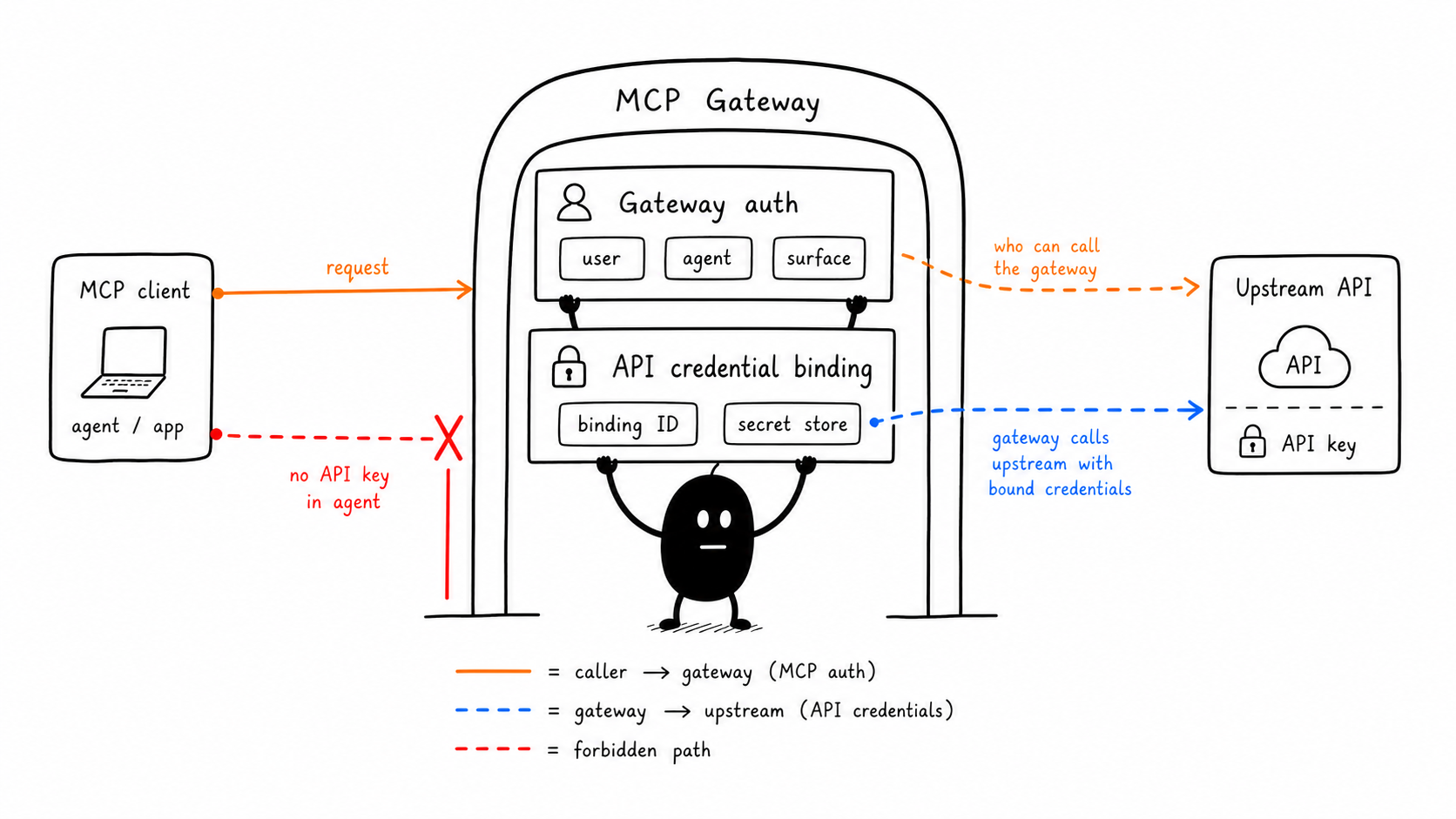
Why it mattersAgents should prove who they are without carrying the secrets used to call upstream APIs.
Authenticate The Client In Context
The gateway sees user, agent, workload, client surface, tenant, and environment.
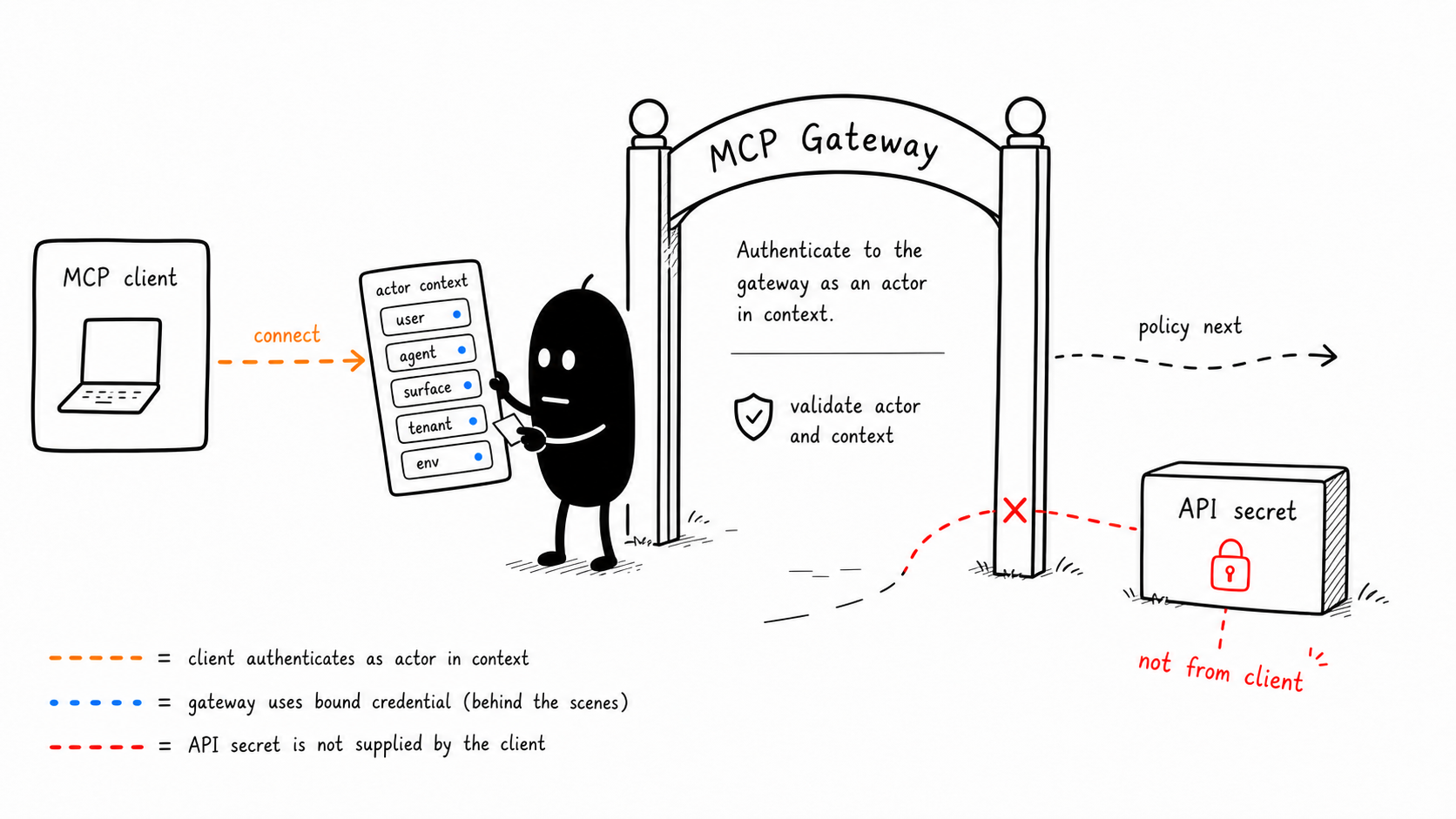
Why it mattersPolicy needs actor and surface context before any upstream credential is considered.
Filter Discovery Before The Agent Sees Tools
Policy decides which generated tools appear in tools/list.
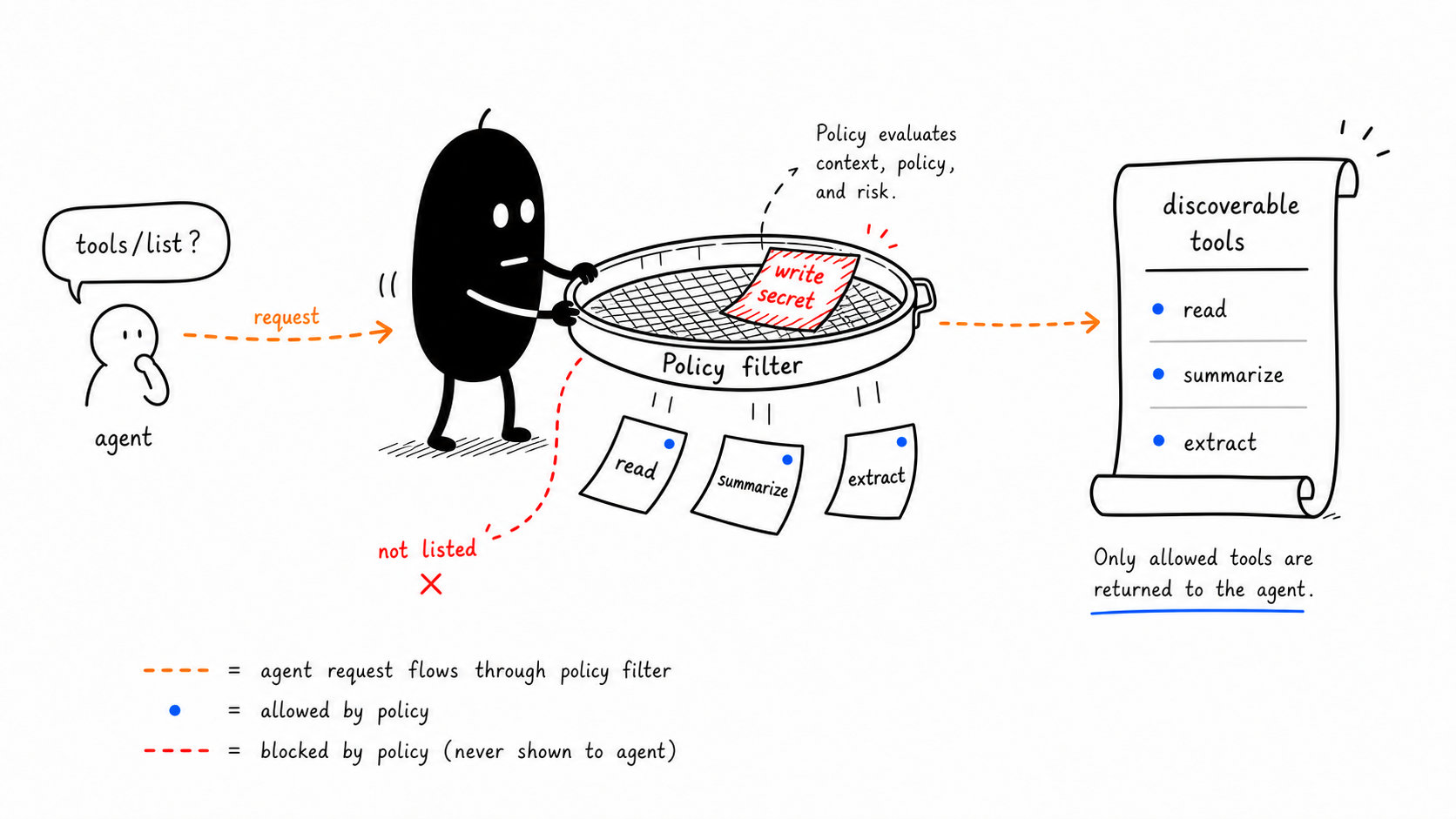
Why it mattersUnauthorized API-backed tools should be hidden, not advertised first and denied later.
Detect API Auth During Import
OpenAPI or Postman import detects upstream auth requirements such as API key, bearer, basic, OAuth2, none, or unknown.
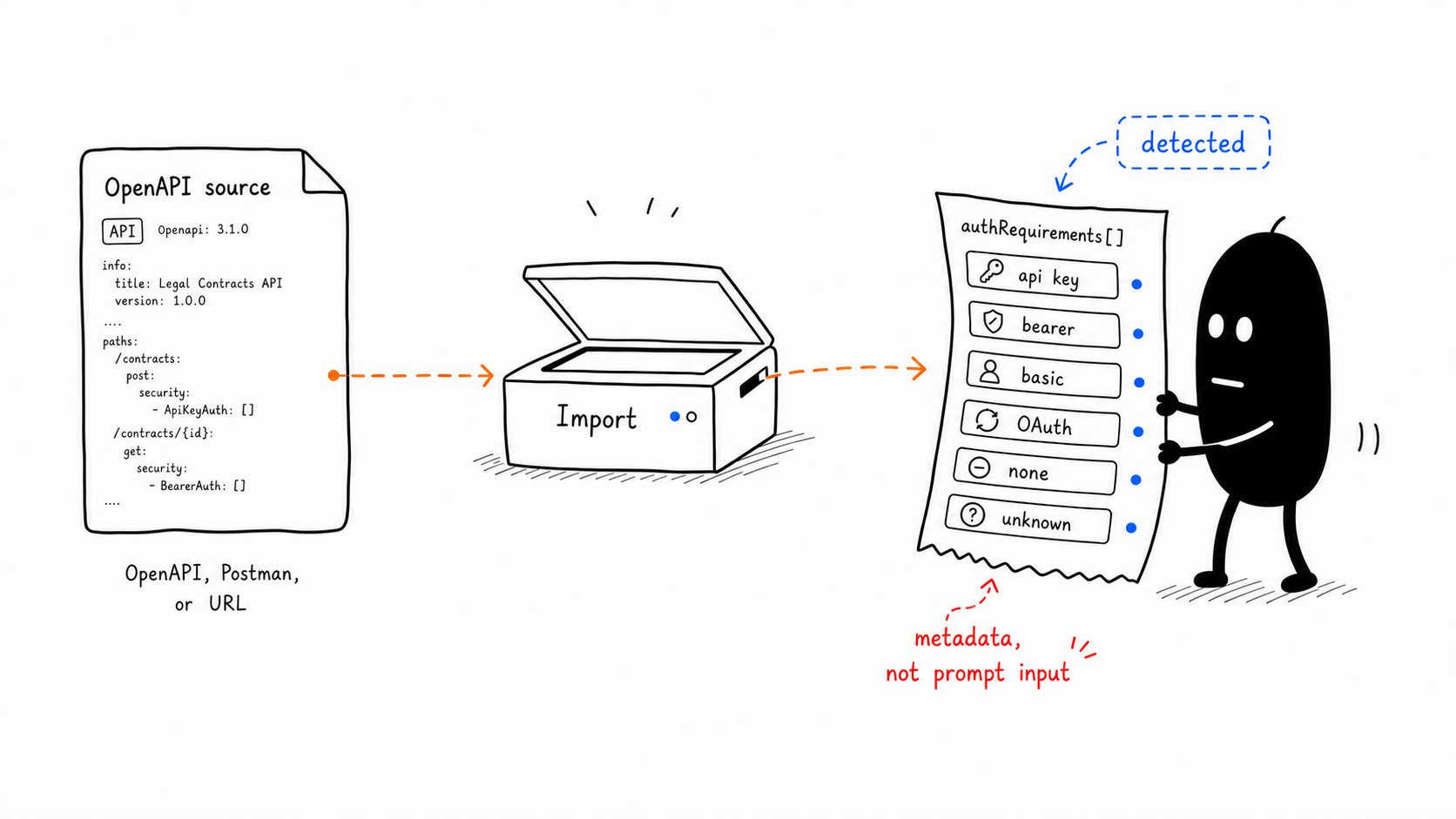
Why it mattersAPI auth becomes gateway runtime metadata, not an input the agent must provide.
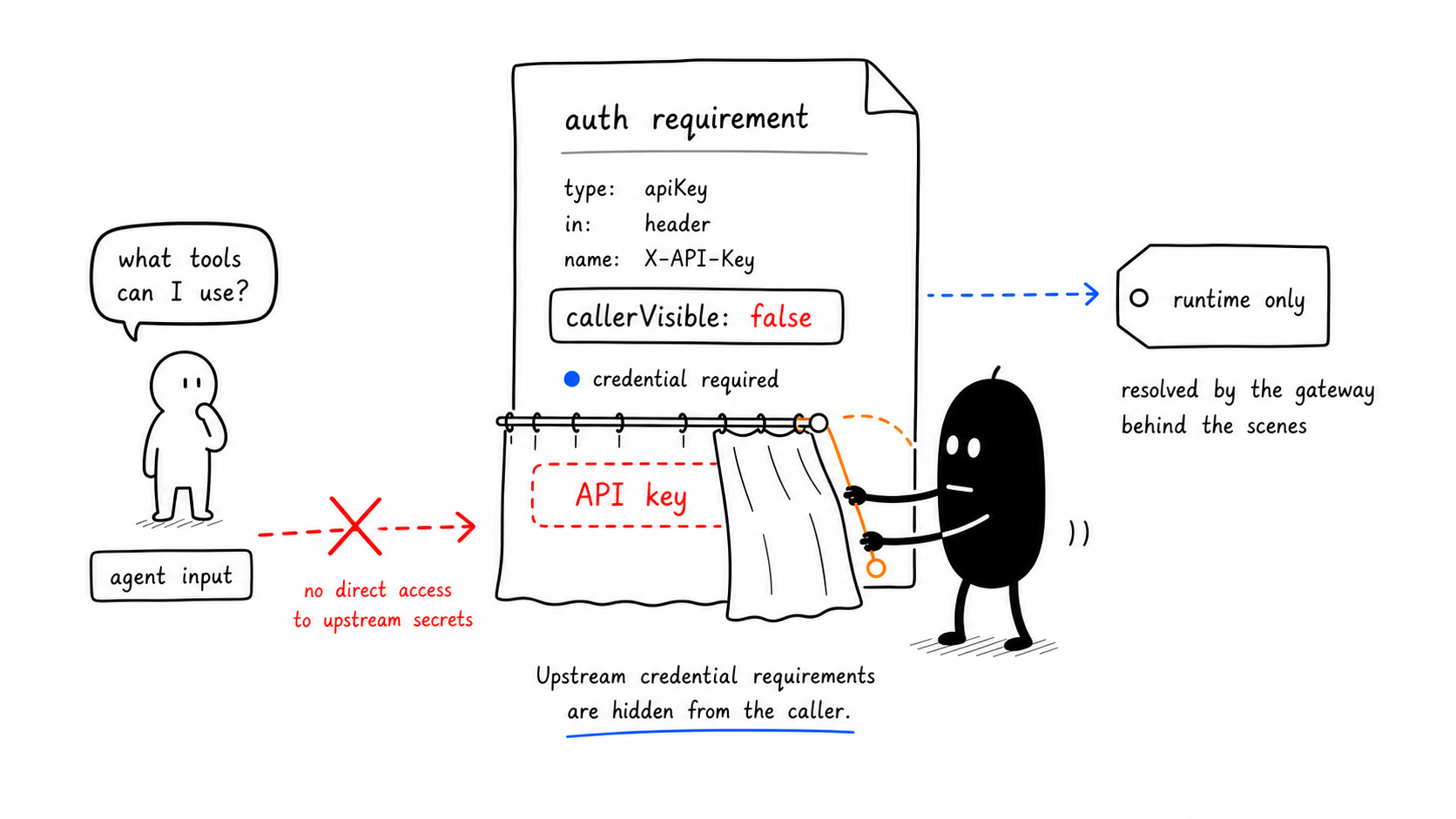
Bridge With A Credential Binding
The gateway stores an opaque binding ID that points to a customer secret store or identity system.
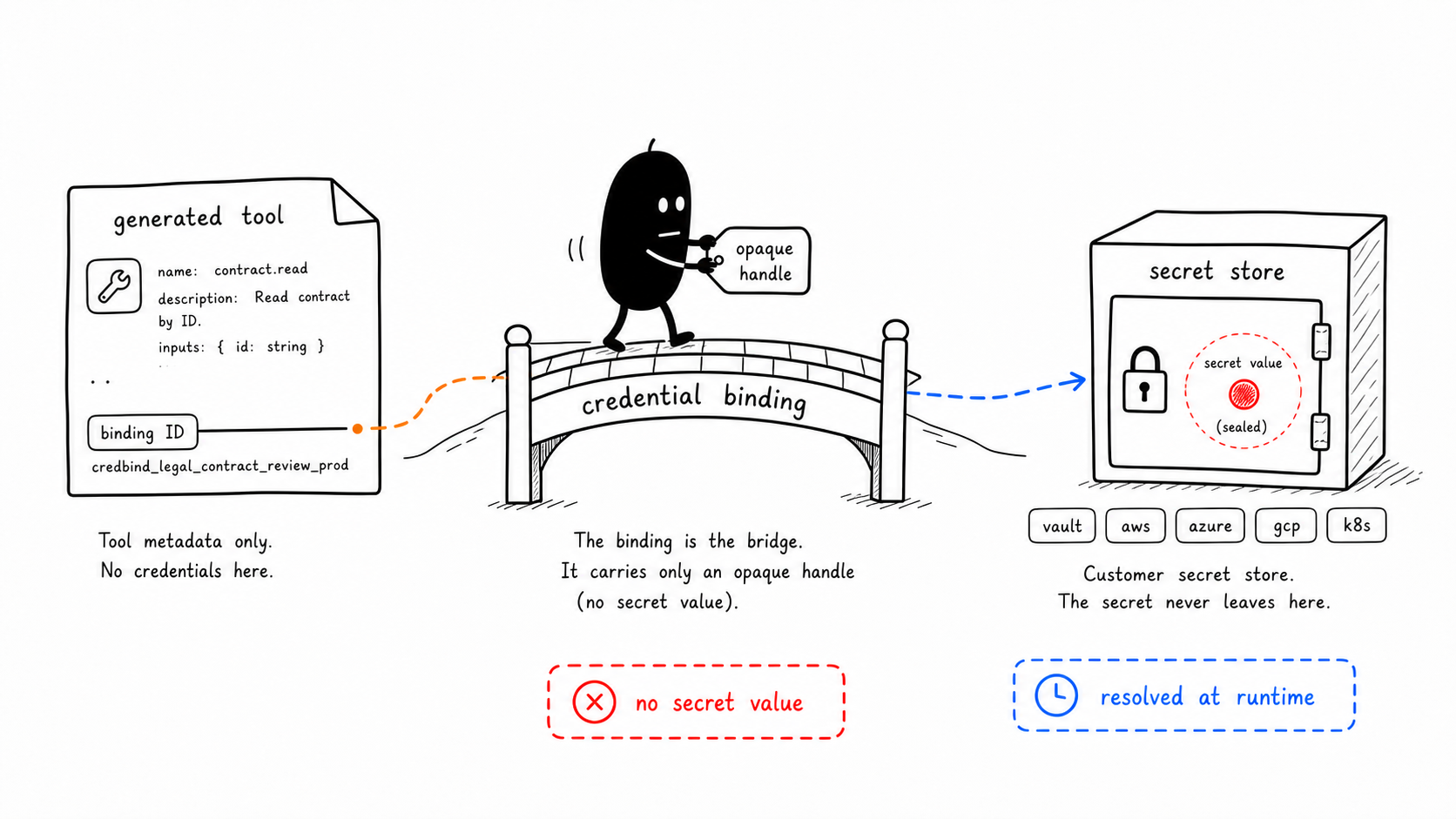
Why it mattersRuntime can resolve credentials without putting secret material into schemas, prompts, or logs.
Generate Business Inputs Only
The generated MCP tool accepts business fields like to, body, and template_id.
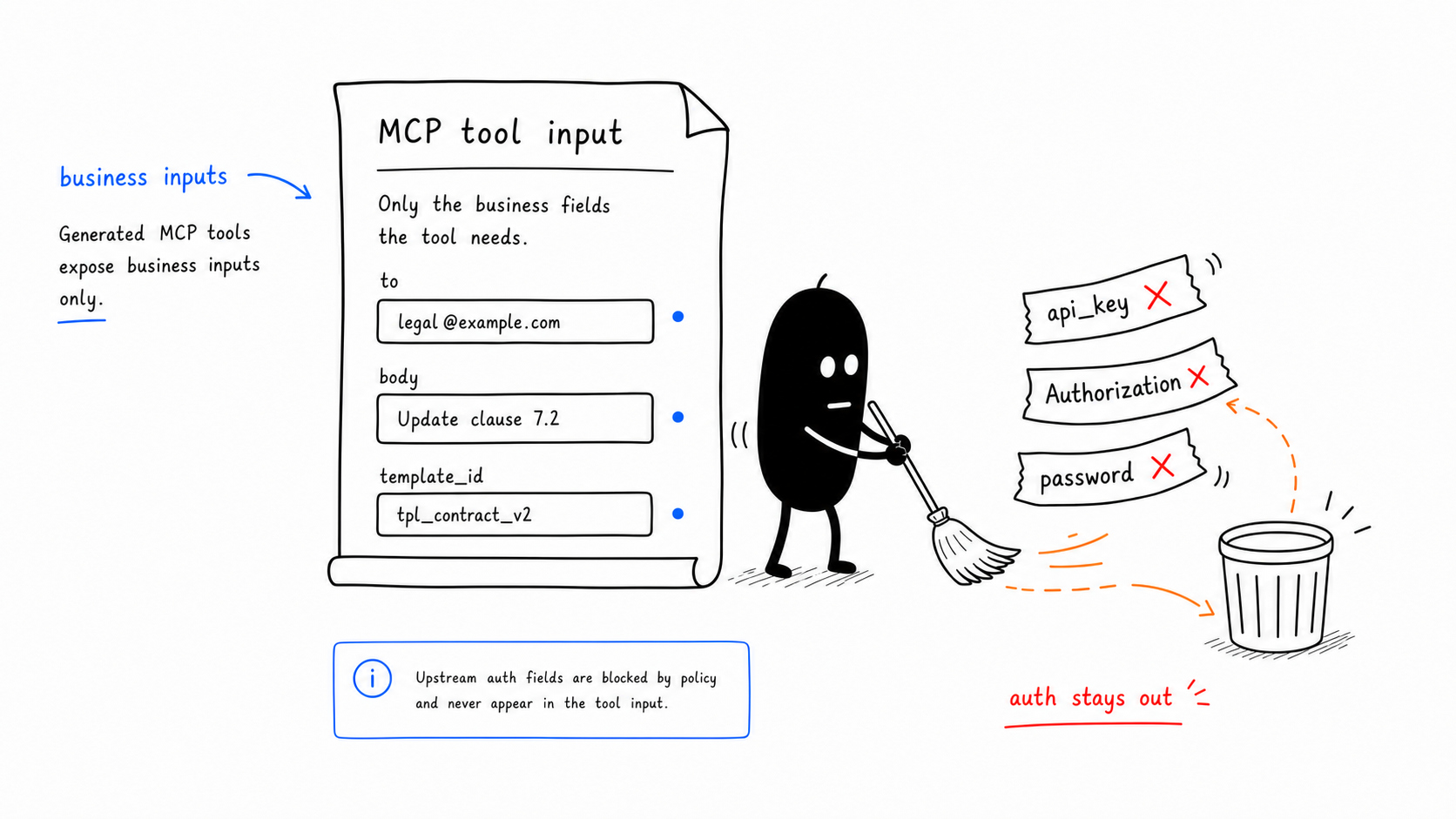
Why it mattersAgents can call useful tools without becoming secret carriers.
Check Runtime Gates First
The gateway checks source approval, operation selection, host allowlist, policy, schema, binding, and size limits.
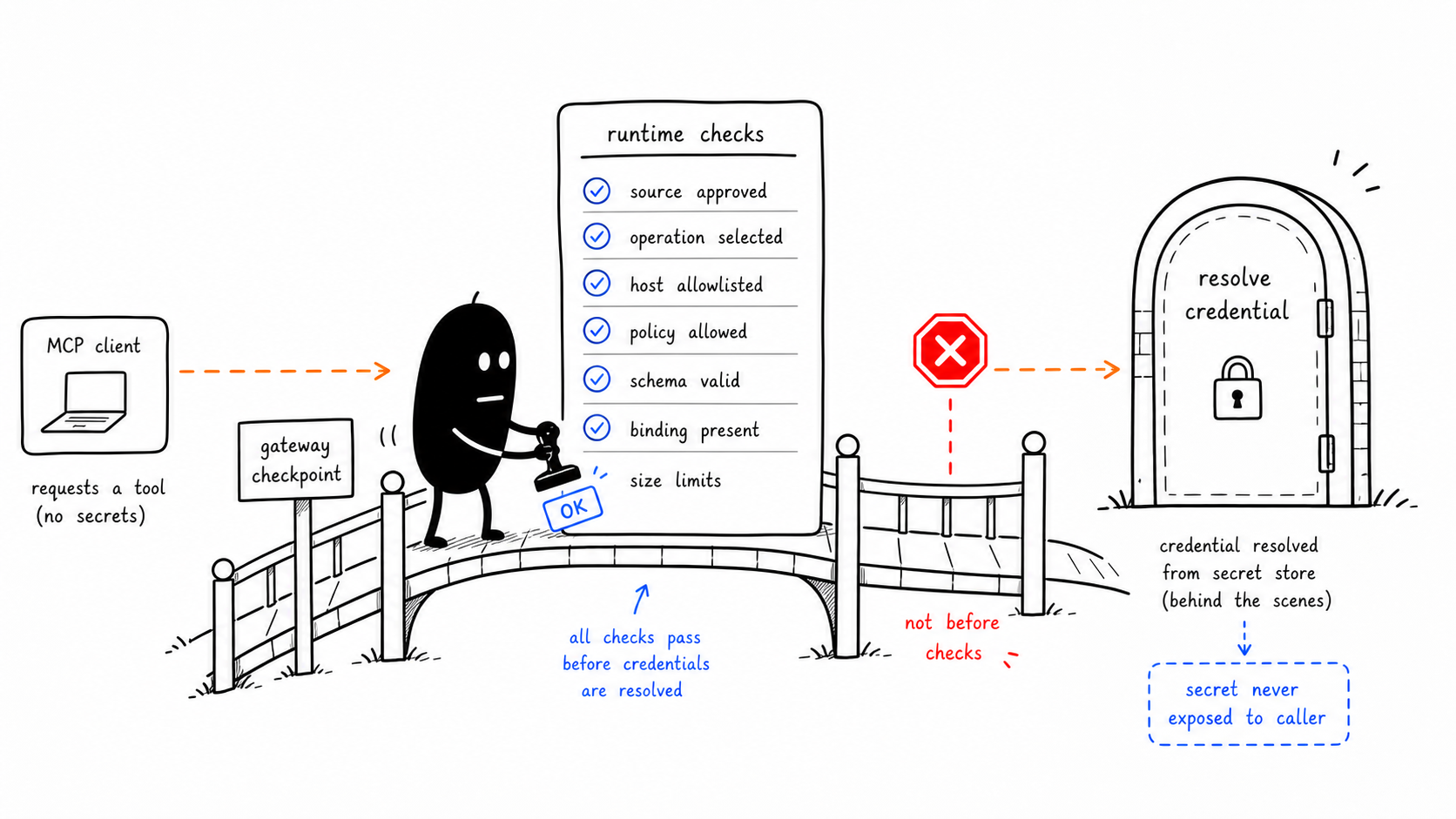
Why it mattersCredential resolution should happen only after the request is allowed and well formed.
Inject Upstream Auth In The Adapter
The API-to-MCP adapter injects the right upstream auth after resolving the binding.
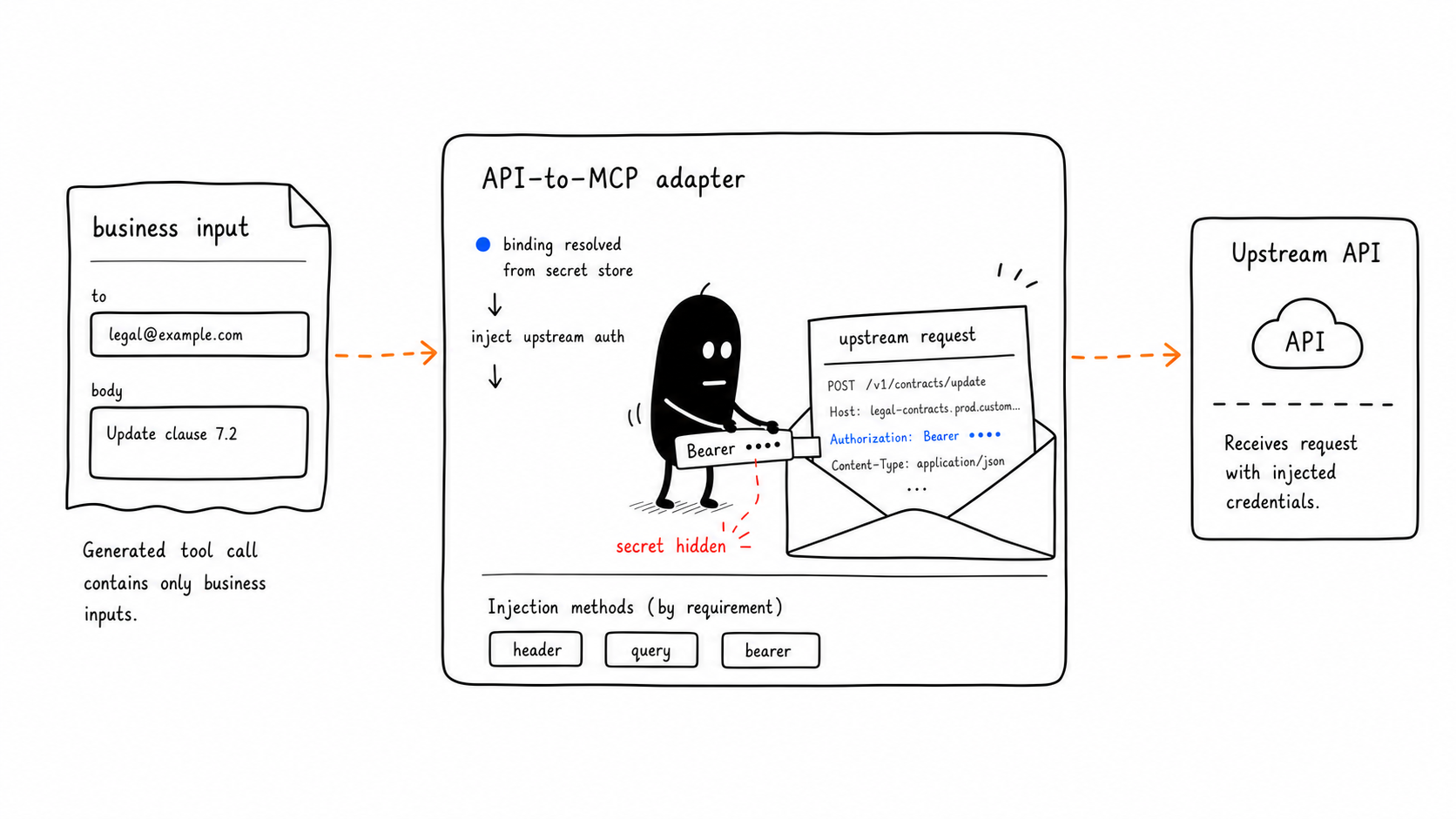
Why it mattersThe upstream API receives required auth while the MCP caller never sees or supplies the secret.
Map Auth Methods Deliberately
API key, bearer, OAuth2, basic, HMAC, mTLS, cloud IAM, and cookie/session auth require different binding strategies.
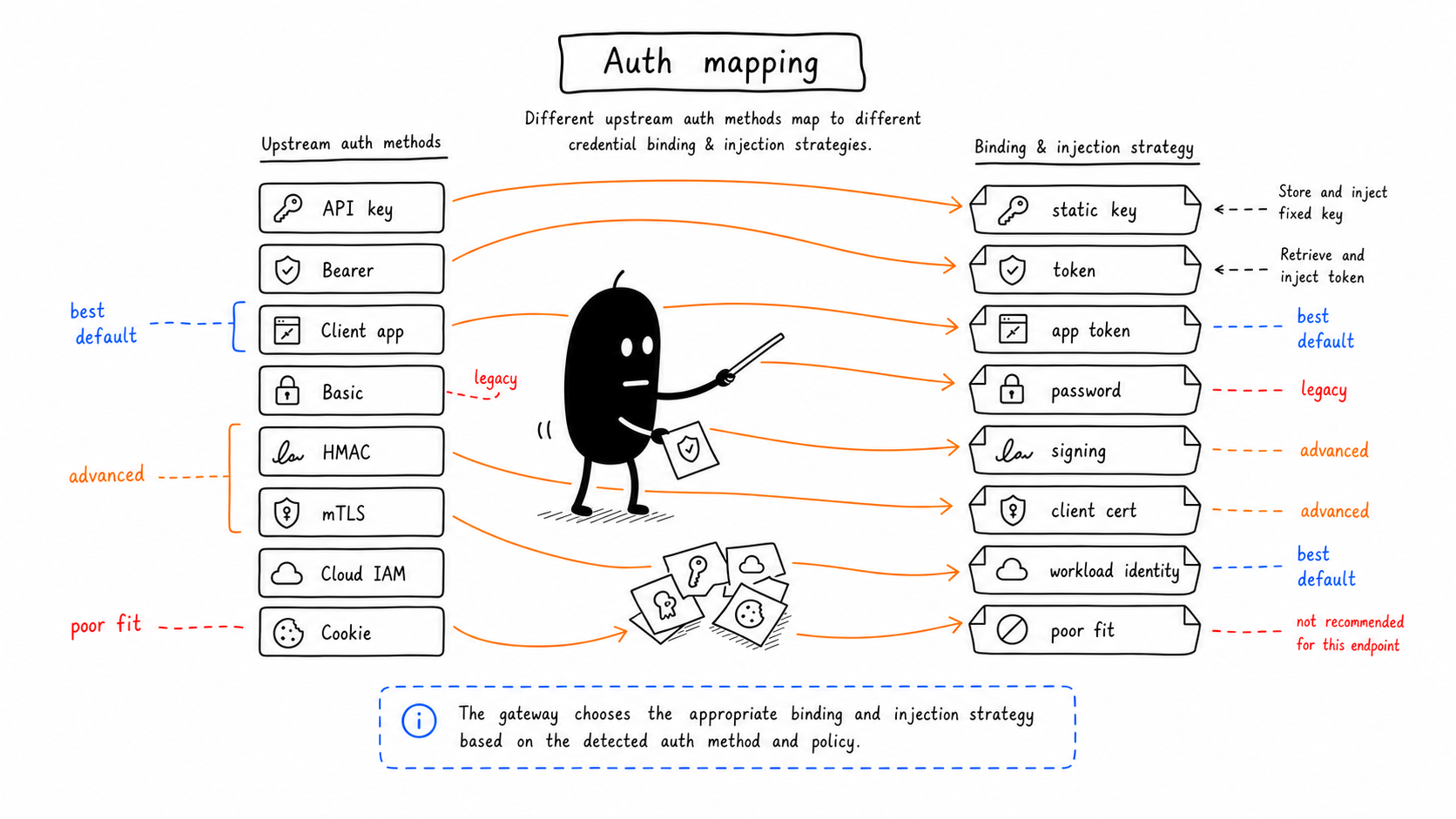
Why it mattersA gateway should not flatten every upstream auth method into one unsafe credential model.
Audit Metadata, Not Secrets
Audit records binding ID, credential status, policy outcome, adapter outcome, and request ID.
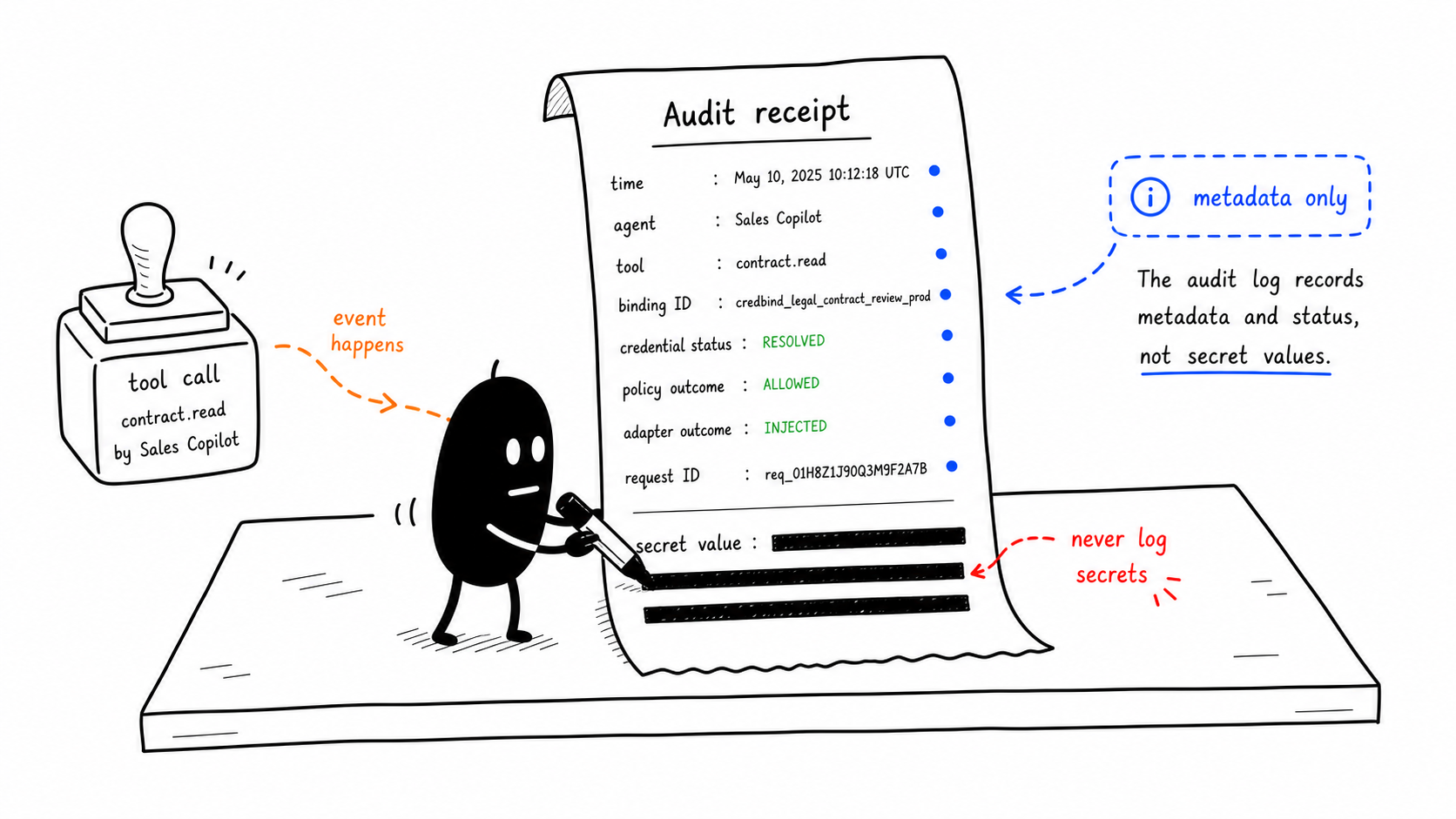
Why it mattersSecurity can investigate blast radius without turning audit logs into another secret store.
Operate Through UI, API, And CLI
Web UI, HTTP API, and CLI all operate the same control-plane objects.
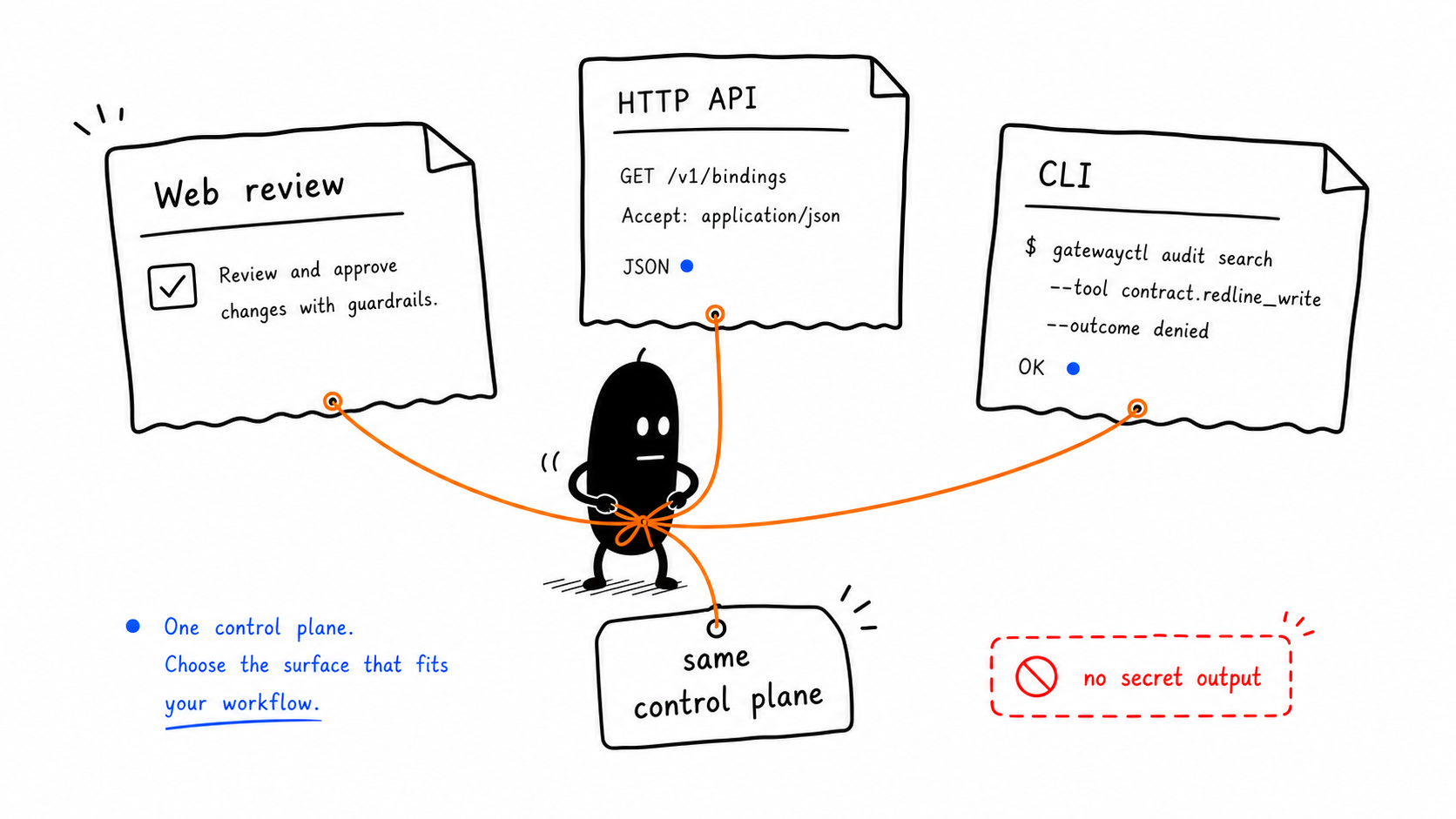
Why it mattersEnterprise teams need review screens, automation hooks, and runbook-friendly commands for the same auth boundary.
API auth boundary
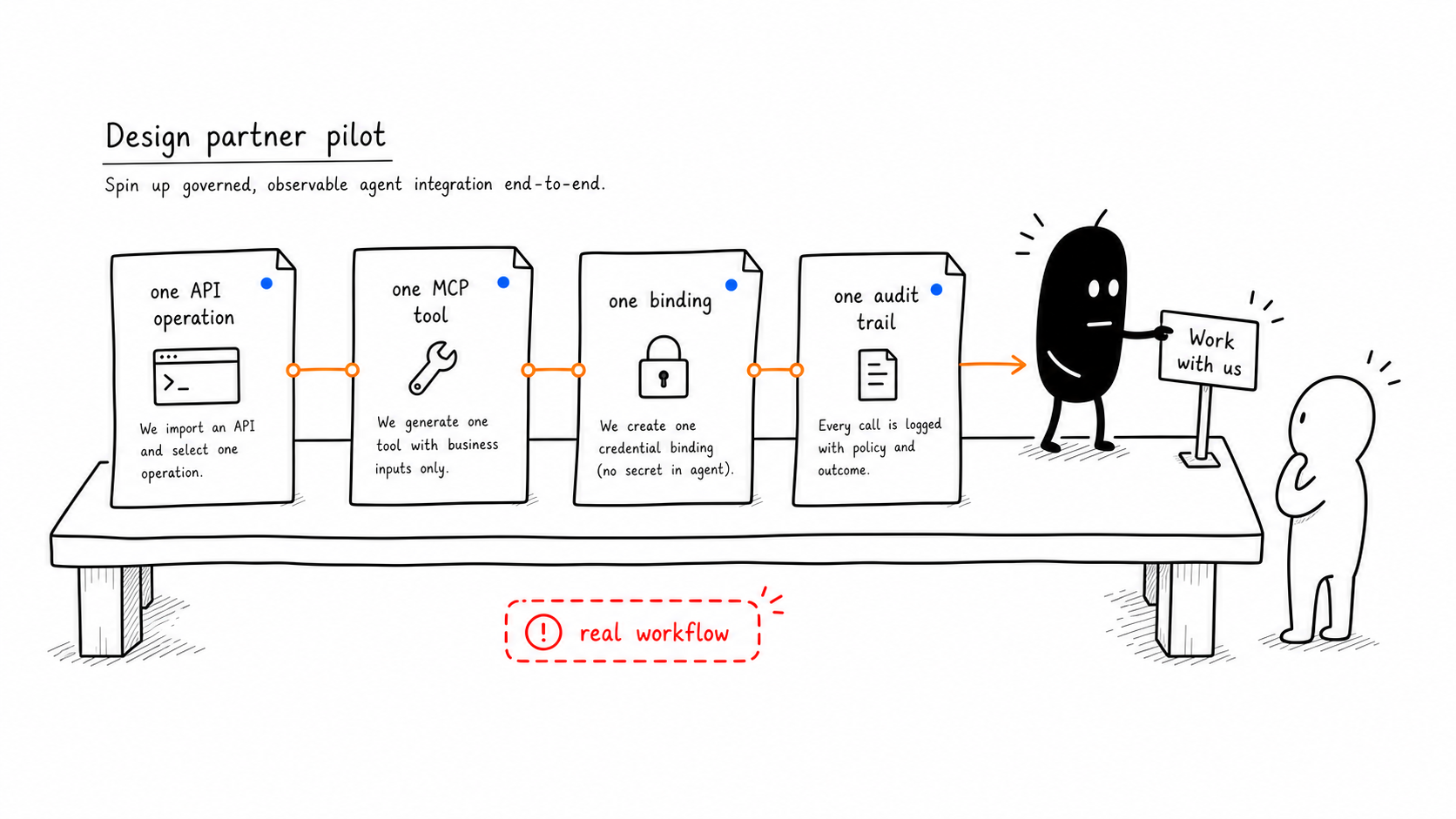
Prove the boundary with one API-backed tool
We are looking for teams who want to work closely with us on governed API-to-MCP adoption.
Start with one real API operation, one generated MCP tool, one credential binding, one policy path, and one audit trail. We will prove that the agent can use the API-backed tool without receiving the upstream credential.
The goal is simple: useful API-backed MCP tools, clear policy boundaries, brokered credentials, and evidence your security team can review.
Book a walkthrough